
The Role of Cleaning in...
22 October 2024
Jul
Water tanks are one of the most overlooked parts of any home or building in Qatar, yet they directly affect the quality of the water your family, employees, or guests use every single day. Whether it’s an overhead tank on a villa rooftop, an underground tank at a commercial building, or an industrial tank at a facility, dirt, sediment, algae, and bacteria build up over time, no matter how “clean” the water looks coming out of the tap. If you’ve ever wondered how often water tank cleaning in Qatar should really happen, this guide breaks down the recommended schedule, the warning signs you shouldn’t ignore, and why the region’s climate makes this task more important here than almost anywhere else.
If your property is also due for other seasonal upkeep, it’s worth pairing tank maintenance with a broader maintenance services check so nothing falls through the cracks.
Qatar’s extreme summer heat, high humidity swings, and dust-heavy environment create ideal conditions for tank contamination:
Every 6 months. Twice-a-year cleaning strikes the right balance between hygiene and practicality. Larger households or older, sun-exposed tanks may need every 3–4 months.
Every 3–4 months. High-occupancy buildings see greater daily water demand, more turnover, and a higher risk of contamination affecting more people at once.
Every 2–3 months, or per regulatory requirement. These facilities have stricter hygiene obligations, and many operators also schedule monthly inspections even if a full clean isn’t due.
At least twice a year, with more frequent inspections, since underground tanks are harder to monitor visually.
Before first use, regardless of the calendar. Newly installed tanks often contain construction dust, sealant residue, or piping debris.
1. Water drainage and isolation to prevent contaminated water from entering the system
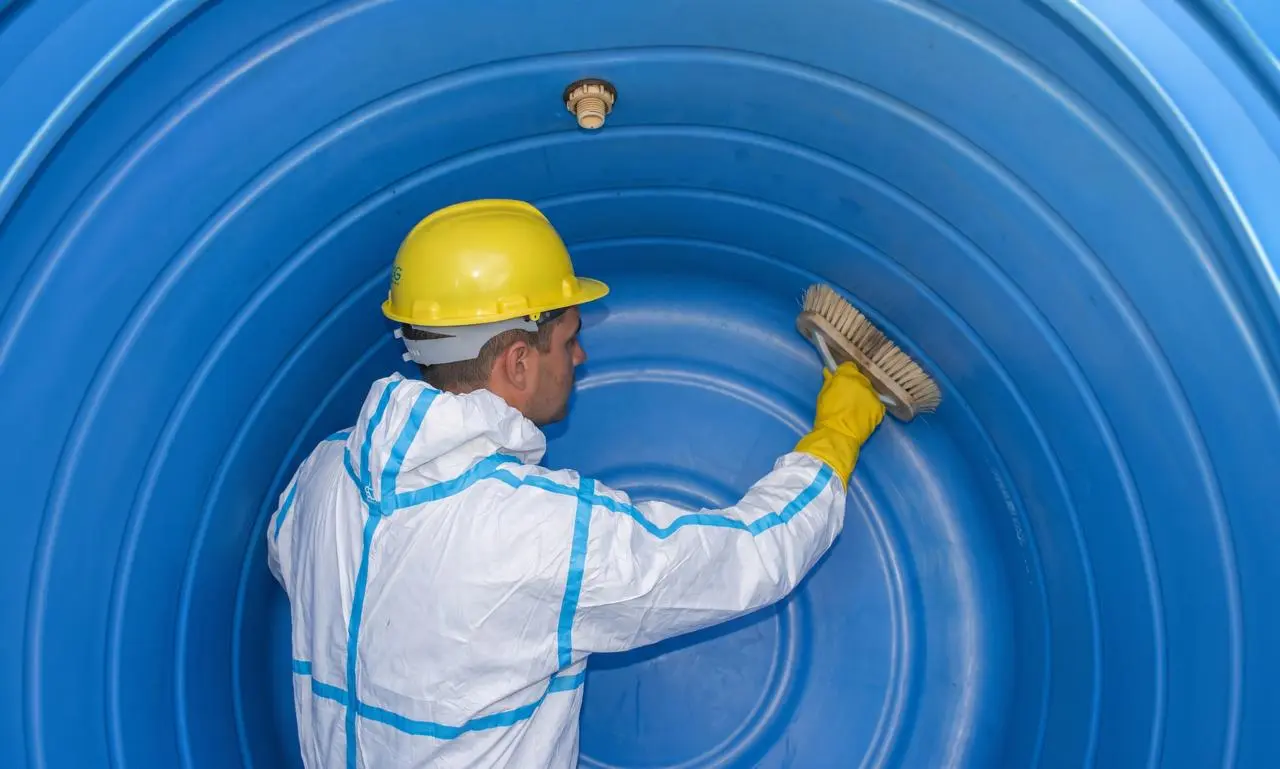
2. Manual and mechanical scrubbing of interior walls, floor, and corners to remove sediment, algae, and biofilm
3. High-pressure rinsing to flush out loosened debris completely
4. Disinfection using safe, approved sanitizing agents
5. Final rinse and water quality check before refilling and reconnecting
6. Inspection of the tank structure, cover seals, vents, and float valves
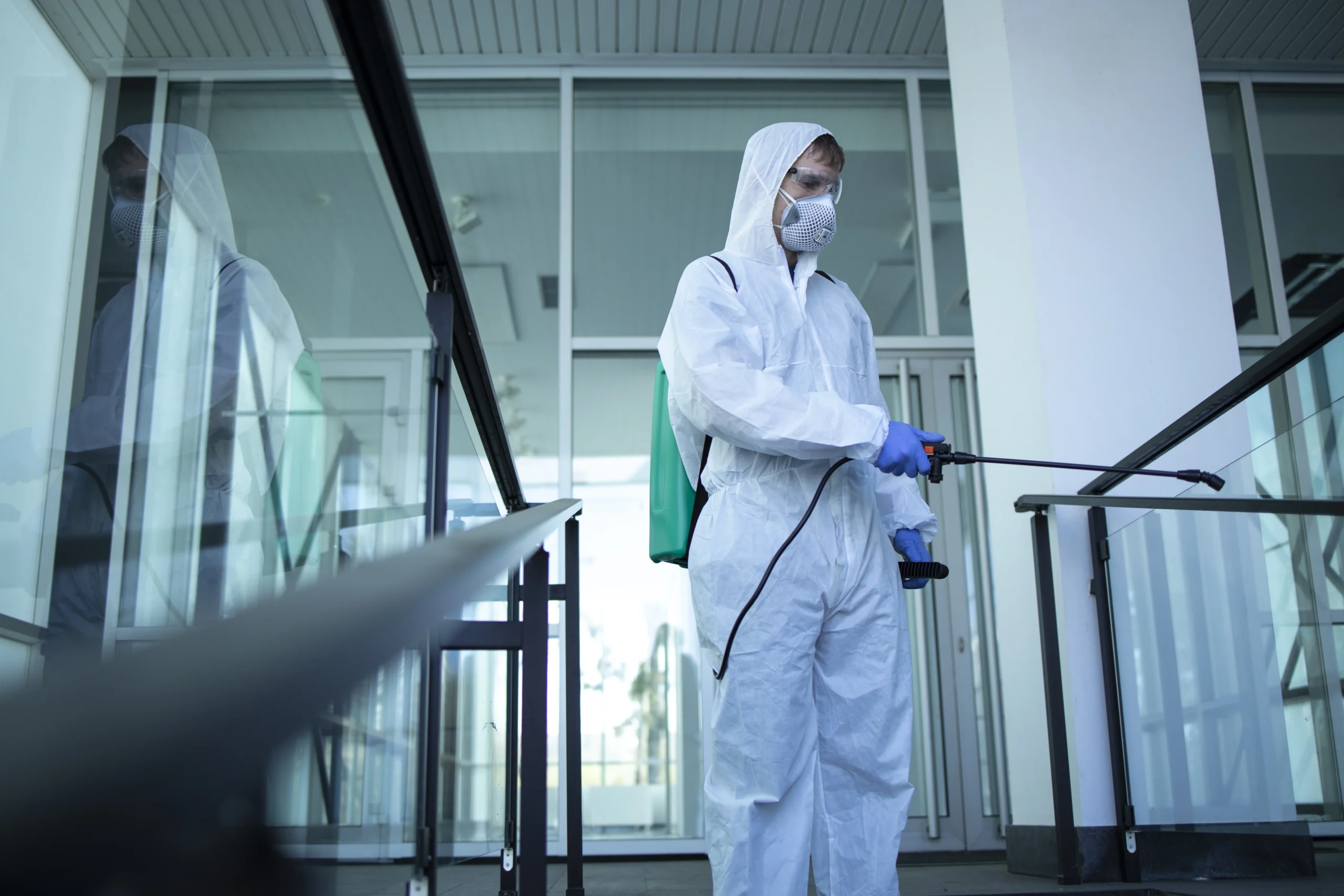
Tank hygiene is closely tied to overall water safety, which is why many facilities pair tank cleaning with regular disinfection services.
Can I clean a water tank myself, or do I need a professional?
Small surface cleaning can be done by maintenance staff, but a full clean involving drainage, scrubbing, and disinfection is safer with a trained team, given the confined-space and chemical-handling risks involved.
Does Kahramaa regulate tank cleaning in Qatar?
Kahramaa sets water quality standards up to the point water enters a property; once inside your storage tank, cleanliness becomes the owner’s or facility manager’s responsibility.
How long does a water tank cleaning service take?
A standard residential tank usually takes 1–3 hours, including drainage, cleaning, disinfection, and refilling. Larger tanks take longer.
Is it safe to use water immediately after tank cleaning?
Yes, once rinsed, disinfected, and refilled following standard protocol, the water is safe for normal use.
What’s the difference between tank cleaning and tank disinfection?
Cleaning removes sediment, algae, and biofilm; disinfection follows immediately after to eliminate remaining bacteria. A proper service always includes both.
Metro Group Qatar provides professional tank cleaning services for overhead, underground, and industrial tanks across Doha and the wider region. For properties needing ongoing upkeep, our cleaning maintenance services can bundle tank cleaning with other scheduled tasks.
If you’re not sure when your tank was last cleaned, that’s usually a sign it’s overdue. Contact Metro Group today to book an inspection.
Related reading: Annual Cleaning Maintenance Contracts in Qatar | Office Disinfection Services in Qatar | Browse all Metro Group blog posts

Running an office in Doha means dealing with dust, heavy foot traffic, and daily wear on every surface. Between busy work hours, back-to-back meetings, and constant client visits, cleaning is …
Clean water is something every home and business in Qatar depends on every single day. With the country’s hot climate, high humidity spells, and dusty conditions, water tank cleaning is …